Hazard Identification Techniques for Safer Workplaces
Identifying hazards before they cause harm is the foundation of any effective safety program. Hazard identification techniques are practical methods organizations use to find, document, and prioritize risks in their workplaces so they can take action to eliminate or control them. Whether you manage an office, a busy warehouse, or a construction site, a consistent approach to recognizing hazards reduces incidents, supports compliance, and builds a safety culture that protects people and assets.

Why consistent hazard identification techniques matter
Using repeatable hazard identification techniques gives teams a shared language and process for spotting unsafe conditions and behaviors. When techniques are systematic—rather than ad hoc—companies can compare findings over time, spot trends, and focus resources on the highest risks. For example, an office may discover recurring ergonomic complaints through formal assessments, a warehouse could identify a pattern of forklift-pedestrian near-misses by reviewing incident data, and a construction firm can reduce falls by tracking inspection results tied to specific tasks. Consistency turns observations into measurable safety improvements.
Observation-based techniques: walkthroughs and inspections
Workplace walkthroughs
Walkthroughs are straightforward, practical hazard identification techniques that involve visually inspecting a work area while engaging with employees. A structured walkthrough looks beyond obvious hazards to include housekeeping, access routes, emergency exits, lighting, signage, and worker practices. In an office setting a walkthrough might focus on cable management, workstation ergonomics, and fire safety; in a warehouse it would include aisle clearance, pallet stacking, and lighting; on a construction site it should concentrate on edge protection, scaffold integrity, and materials storage. The value lies in catching hazards where they occur and immediately discussing corrective actions with frontline staff.
Formal inspections and checklists
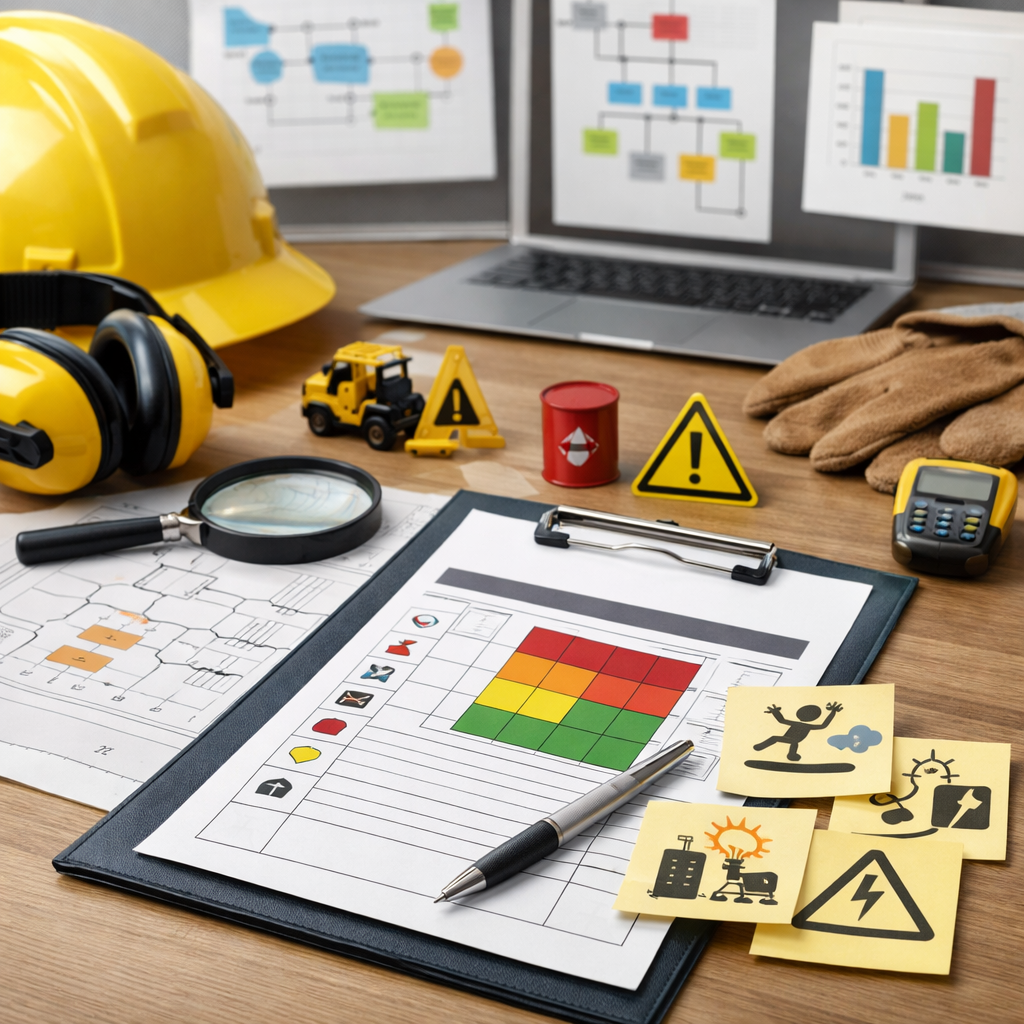
Formal inspections use standardized checklists to ensure consistency and thoroughness. Checklists translate regulations and best practices into actionable items that inspectors can record and follow up on. They also make hazard identification techniques auditable and scalable across multiple sites. A robust checklist prompts inspectors to assess not only physical conditions but also procedures, permits, and training records—closing the gap between what people do and what should be done.
- Common checklist items for offices: emergency lighting, blocked exits, loose carpeting, ergonomic setup, electrical outlets and extension cords.
- Common checklist items for warehouses: aisle widths, forklift maintenance tags, load capacities, spill response supplies, aisle markings.
- Common checklist items for construction: edge protection, crane exclusion zones, PPE availability, permit-to-work signage, temporary works inspections.
Participatory techniques: employee reporting and safety observations
Engaging workers in hazard identification techniques increases coverage and strengthens buy-in. Participatory methods include near-miss reporting systems, toolbox talks, safety observation programs, and structured interviews. Near-miss reports are particularly valuable because they reveal precursors to incidents without the cost of injury. For instance, office staff reporting a tripping hazard can prompt quick remediation before someone is hurt, while warehouse employees flagging damaged pallet racking can prevent a collapse. On construction sites, toolbox talks encourage crews to discuss task-specific hazards each morning, ensuring that changes in conditions are immediately considered.
To be effective, participatory systems must be simple, non-punitive, and actionable. Provide easy ways to report—mobile apps, suggestion boxes, or quick paper forms—and ensure each report receives timely feedback and visible corrective action. Recognition for proactive reporting reinforces the behavior and helps normalize hazard communication across all levels of the organization.
Analytical techniques: Job Hazard Analysis, What-Ifs, and task-based assessments
Analytical hazard identification techniques dig deeper into how work is done and how things can go wrong. A Job Hazard Analysis (JHA) breaks a task into steps, identifies hazards for each step, and specifies controls to reduce risk. JHAs are especially useful for repetitive or high-risk tasks: a warehouse JHA on pallet loading can identify pinch points and ergonomic risks; a construction JHA for concrete formwork can highlight fall and crush hazards; an office JHA can analyze mailroom lifting tasks to recommend mechanical aids.
What-if analyses and brainstorming sessions expand beyond routine tasks to consider uncommon scenarios, system failures, and interactions between activities. These techniques are valuable for complex environments where one change can create new hazards—such as introducing a new piece of equipment in a warehouse or altering scaffolding layouts on a building project. Analytical approaches are often complemented by incident and near-miss data, which help prioritize which tasks need detailed review.
Implementing hazard identification techniques effectively
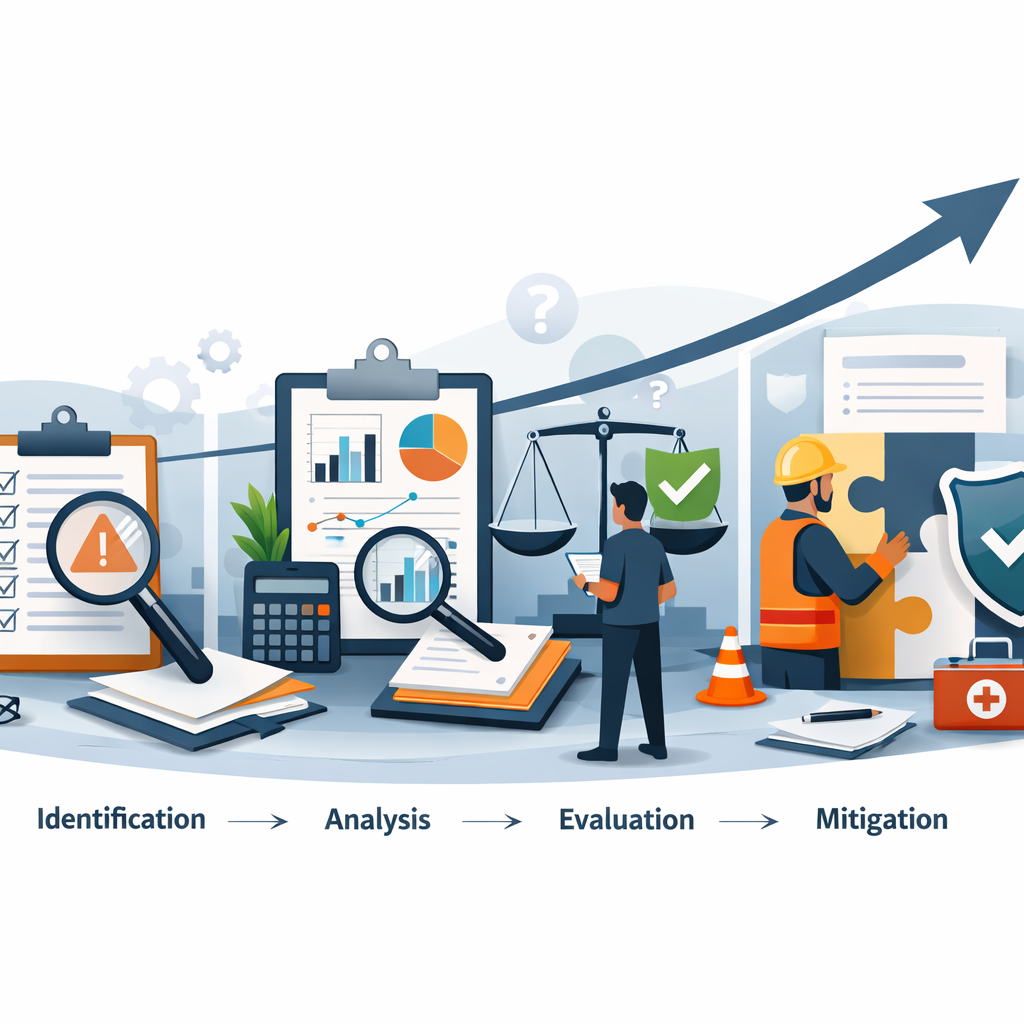
Integrating hazard identification techniques into daily operations requires leadership commitment, clear processes, and training. Start by defining which techniques you will use, how frequently they’ll be applied, and who is responsible for follow-up. Establish a simple tracking system to record findings, assign corrective actions, set due dates, and verify completion. Training must cover how to spot hazards, how to use checklists or JHA templates, and how to report observations so findings are consistent across teams and sites.
Make sure hazard identification is part of broader risk management: link identified hazards to risk assessments, controls, and performance metrics. Regularly review trends to identify systemic issues that require higher-level interventions such as engineering changes or policy updates. For organizations with multiple locations, standardize core techniques while allowing site-specific adaptations so the methods remain relevant to local conditions.
Conclusion: Hazard identification techniques for safer workplaces
Hazard identification techniques are practical tools that transform observations into preventive action. Whether using walkthroughs, checklists, participatory reporting, or analytical methods like JHAs, the goal is the same: uncover hazards early and control them effectively. By combining multiple techniques and embedding them into daily routines—tailored to office, warehouse, or construction environments—organizations can reduce injuries, improve compliance, and foster a proactive safety culture. Commit to consistent application, timely follow-up, and continuous learning, and hazard identification will become a powerful driver of workplace safety.