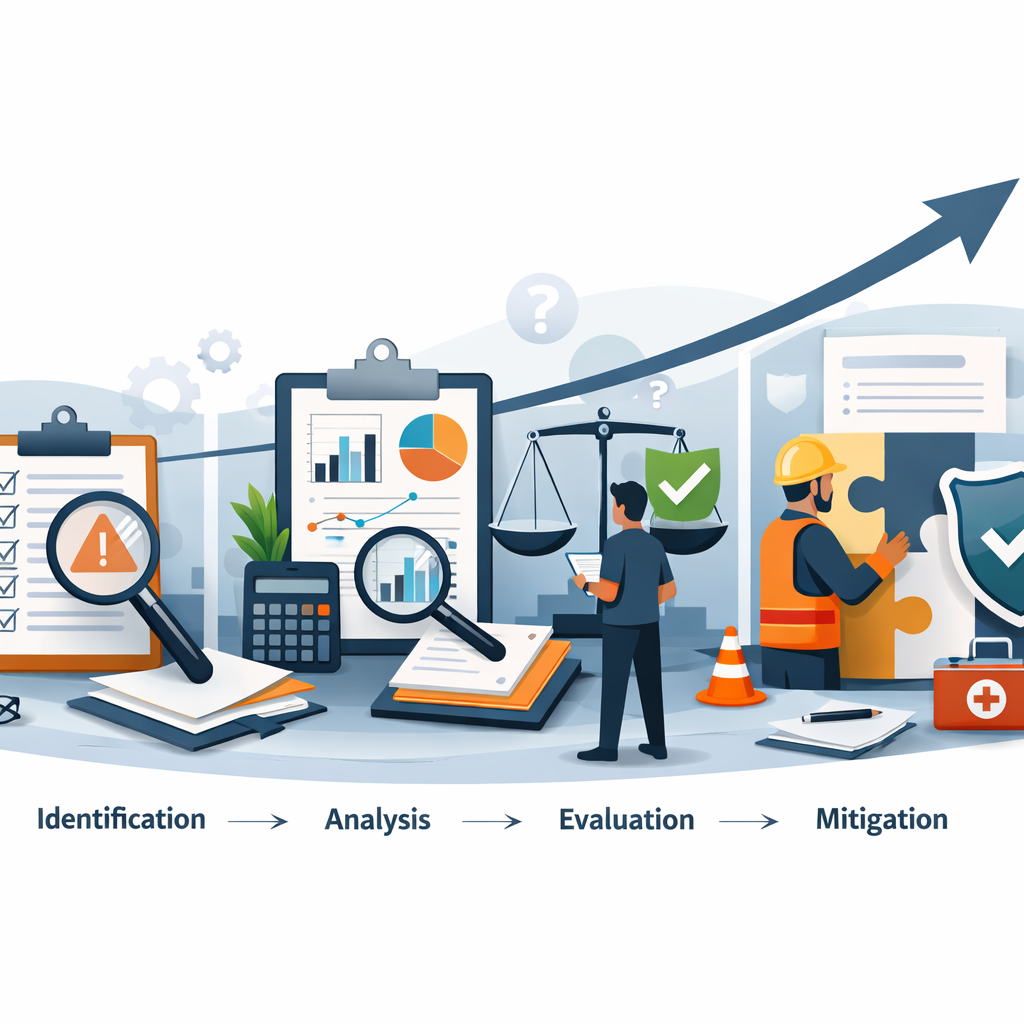
job safety analysis methods: Powerful Strategies to Cut Incidents and Protect Teams
Job safety analysis methods are the backbone of proactive workplace safety—when done well they reduce incidents, lower costs, and build a safer culture. This article explains why these methods matter, shows how to break down tasks, identify hazards, and apply effective controls, and gives practical, field-tested steps you can use immediately. Whether you lead a frontline crew, manage a safety program, or are responsible for compliance, you’ll walk away with clear techniques to reduce risk and prevent injuries.

Why job safety analysis methods matter for every workplace
Understanding and consistently applying job safety analysis methods reduces uncertainty and transforms reactive safety into a systematic prevention strategy. Incidents usually stem from overlooked steps, hidden interactions, or incorrect assumptions about control measures. A strong JSA process surfaces the real sequence of work, pinpoints where exposures occur, and links controls to specific steps—driving measurable reductions in incidents, near-misses, and loss time. Regulatory bodies such as OSHA recognize task-level hazard analysis as best practice for high-risk activities; see https://www.osha.gov for guidance and standards that reinforce why these methods are essential.
Core job safety analysis methods and how to use them
Common techniques and when to choose them
There are several job safety analysis methods that suit different situations: traditional Job Safety Analysis (JSA)/Job Hazard Analysis (JHA), task-based risk assessments, What-If analysis, Job Safety Observations (JSO), and checklist-based reviews. Select a method based on task complexity: use full-step JSAs for multi-step, high-risk jobs; apply checklist or observational methods for routine tasks with known controls. For guidance and research tools, refer to NIOSH resources at https://www.cdc.gov/niosh and the UK Health and Safety Executive at https://www.hse.gov.uk.
- JSA/JHA: Breaks a job into steps, identifies hazards at each step, recommends controls.
- What-If analysis: Brainstorms potential failure modes for new or changed processes.
- Job Safety Observation: Real-time observation to verify adherence to controls and spot latent hazards.
- Task-based risk assessment: Prioritizes tasks by exposure and likelihood to allocate resources efficiently.
How to break down tasks and identify hazards—step-by-step
Breaking down a job into discrete steps is the foundation of effective job safety analysis methods. Start by gathering the people who actually perform the work—operators, technicians, supervisors—and follow these steps: 1) define the job scope and boundaries (start and end points), 2) observe or map the task in real time, writing down each physical action in sequence, and 3) validate the list with the workers to ensure nothing is missed. When you document steps, use short, action-oriented descriptions like “isolate energy at disconnect,” “position scaffold and secure guardrail,” or “align pipe and tack-weld.” This clarity makes hazard identification precise.
Identifying hazards: look beyond obvious risks
Once steps are documented, identify hazards for each step using four lenses: source (what can cause harm), exposure pathway (how someone could be harmed), consequence (what harm looks like), and frequency (how often exposure occurs). Ask targeted questions: Could the worker be struck by moving equipment? Is there a risk of falls from height while positioning materials? Could a chemical release occur during transfer? For complex systems, employ What-If scenarios and review historical incidents and near-misses—this uncovers latent hazards that simple checklists miss. Capture each hazard with a clear description, affected personnel, and worst credible outcome to prioritize controls effectively.
Applying controls: practical hierarchy and examples
After hazards are cataloged, apply controls using the established hierarchy of controls: elimination, substitution, engineering, administrative, and personal protective equipment (PPE). Prioritize higher-order controls to achieve sustainable risk reduction rather than relying solely on PPE or rule reminders. Examples: if manual lifting causes injuries, eliminate the hazard by redesigning the part to be lighter, substitute with a powered hoist, engineer a fixture to hold loads, implement lift-assist procedures, and finally provide back-support PPE as reinforcement. Document each control by the step and who is responsible for implementation, and include verification actions like inspections or sign-offs to ensure the control is in place and effective.
Real-world examples and a short case study
Example 1—Maintenance on electrical panels: Break the task into isolation, verification of zero energy, removal of covers, and performing the maintenance. Hazard identification reveals risks of arc flash, electrical shock, and slip hazards from tools. Controls applied: engineering (lockout/tagout hardware and insulated tools), administrative (step-by-step LOTO procedure and permit), and PPE (arc-rated clothing). Example 2—Roof work for HVAC install: Task breakdown highlights access, positioning units, and fastening. Hazards include falls, dropped objects, and extreme heat. Controls: elimination/substitution (pre-assembled lighter modules), engineering (temporary guardrails and tied-off tool lanyards), and administrative measures (heat action plan and trainer-supervised lifts). These job safety analysis methods and documented controls reduced near-miss rates in similar projects by measurable margins in multiple field audits.
Common mistakes to avoid, measurement, and implementation tips
Many organizations go through the motions of job safety analysis methods but miss impact because they commit predictable errors: treating JSA as paperwork only, skipping worker validation, failing to update JSAs after changes, and relying excessively on PPE. Avoid these by integrating JSA outputs into daily briefings, making controls visible (labels, tags, permits), and connecting JSAs to training and onboarding. Measure effectiveness with simple leading and lagging indicators: percentage of high-risk tasks covered by JSAs (leading), number of related incidents or near-misses (lagging), and audit compliance rates. Use digital tools or a centralized repository—see internal resource pages like /safety-resources or /training/job-safety-analysis—to maintain version control, track corrective actions, and make JSAs searchable for supervisors and auditors.
Conclusion: embed job safety analysis methods to prevent incidents and build resilience
Job safety analysis methods are not a one-time exercise—they are a practical framework for continuously reducing incidents by breaking down tasks, identifying hazards at the step level, and applying durable controls. Implement the steps in this article: involve the workforce, document clear steps, prioritize higher-order controls, verify implementation, and measure results. When these elements become routine, safety moves from compliance to competence, and your organization gains a proven path to fewer injuries, stronger morale, and lower operational disruption. Make job safety analysis methods a living part of every high-risk activity and watch the incident rates decline and resilience grow.
job safety analysis methods
job safety analysis methods: Powerful Strategies to Cut Incidents and Protect Teams
Meta description: job safety analysis methods that cut incidents—learn step-by-step how to break down tasks, identify hazards, and apply controls using proven techniques to protect workers and reduce risk.
Suggested Slug: job-safety-analysis-methods-reduce-incidents
Image Suggestion: Photo of a multi-disciplinary safety team performing a job safety analysis on a construction site, with a foreman pointing to a task checklist and workers reviewing PPE and controls.
Image Alt Text: job safety analysis methods being performed on a construction site, team reviewing checklist and controls